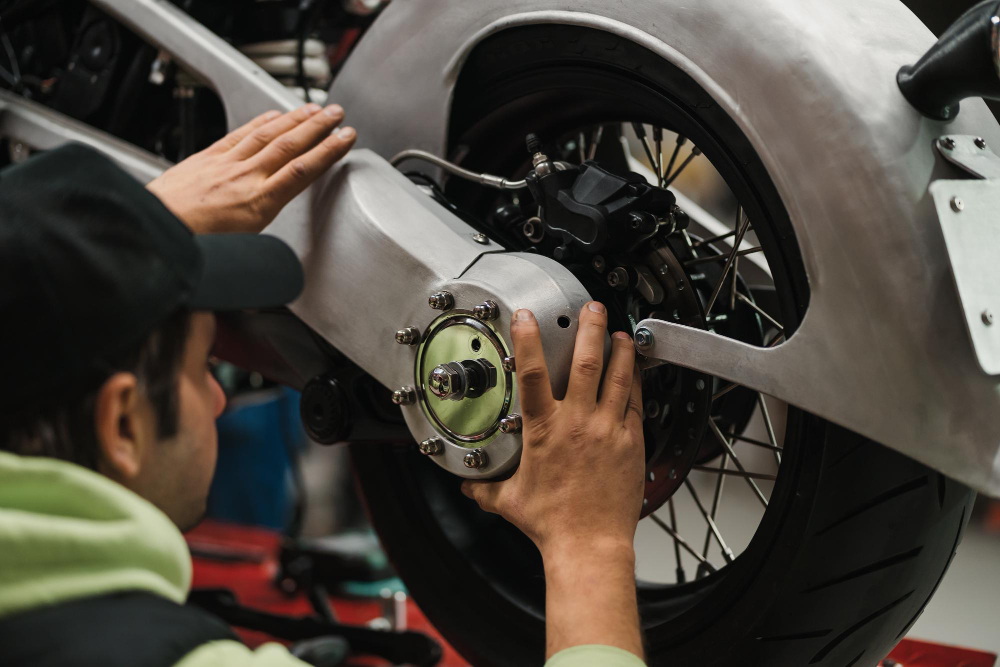
Bring beauty to your beast and stop corrosion from raising its ugly head.
The Process.
A layer of nickel adds hardness to the surface of selected components. Its especially important for parts that rub, grind or enjoy any other form of friction, like sprockets or any other moving parts. But it also looks epic so feel free to use any excuse you like.
The Process.
A layer of nickel adds hardness to the surface of selected components. Its especially important for parts that rub, grind or enjoy any other form of friction, like sprockets or any other moving parts. But it also looks epic so feel free to use any excuse you like.
Ask our Help.
Feel free to reach out to us and let us help you nickeling your bike or certain parts. Simply send us one or preferable a couple of photos of what exactly you would like us to sandblast and feel free to add a description, preferably using our contact form.